
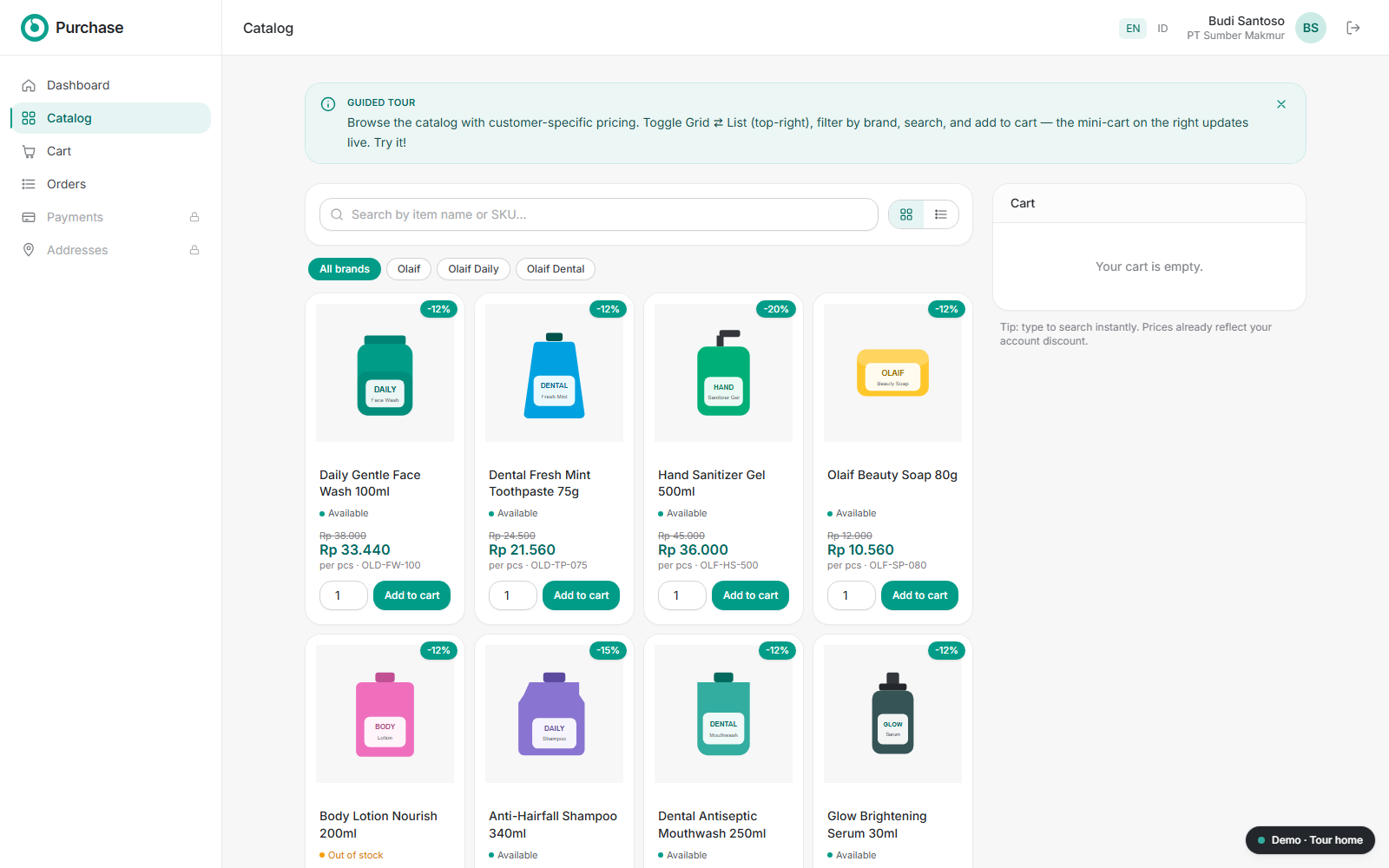
Olaif Purchase
Self-service B2B & distributor ordering portal with per-customer pricing, instant Xendit payments, AI purchase-order capture and real-time Zoho Books sync.
Warehouse Management System brings four marketplaces, two warehouses and the floor between them onto one platform the business owns outright — with a documented, tested exit path out of the rented order platform. Orders sync themselves, a five-stage scanning app takes parcels through picking, camera-checked QA, packing and handover, labels print in waves, and every rupiah reconciles against what the marketplace actually paid.
Every order this business received passed through equipment it did not own. Orders landed at four different marketplaces, were collected by a rented third-party order platform, handed to a chain of middleware, and only then arrived in accounting as revenue. Parcels shipped, but the platform dictated how the warehouse worked, could not be extended, cost a subscription fee every month, and was opaque — when a number looked wrong, there was nowhere to go and look.
We built a system they own: order sync, a warehouse floor app, shipping labels and finance reconciliation on one self-hosted server. Phase 1 was deliberately read-only towards every marketplace — it never ships, never cancels, never requests a label. That let the team run the new screens beside the old ones on the same live orders before switching anything; nothing stopped for a day. Built by Agentiq for an anonymised Indonesian marketplace seller: brand, order and tracking numbers, product and staff names and addresses are fictional, and every screen shown uses synthetic sample data.
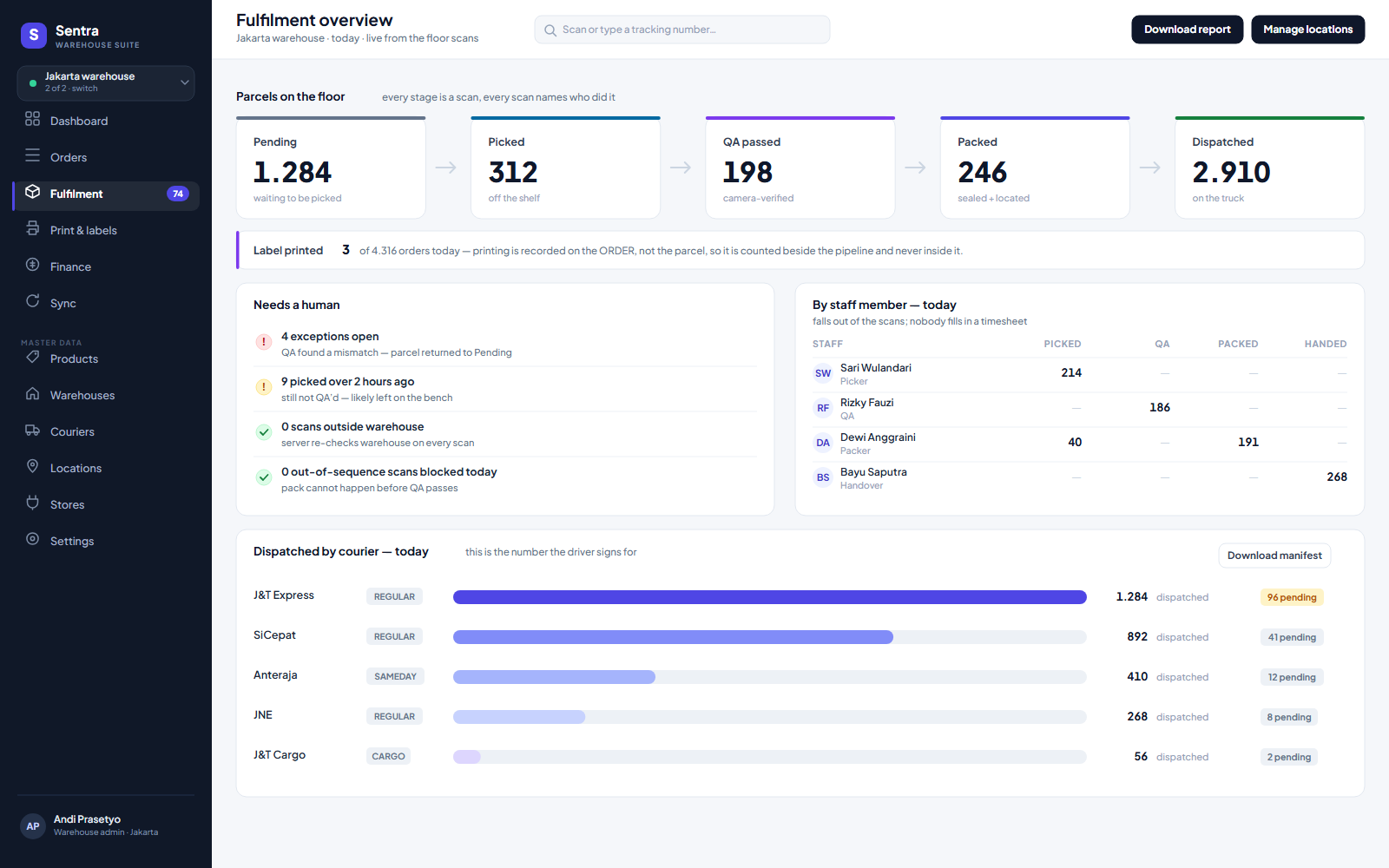
A fulfilment overview built as a work queue: parcels at each of the five stages, an amber alert for anything left unpicked too long, per-staff productivity that falls out of the scan data rather than a separate timesheet, and dispatched and pending counts per courier.
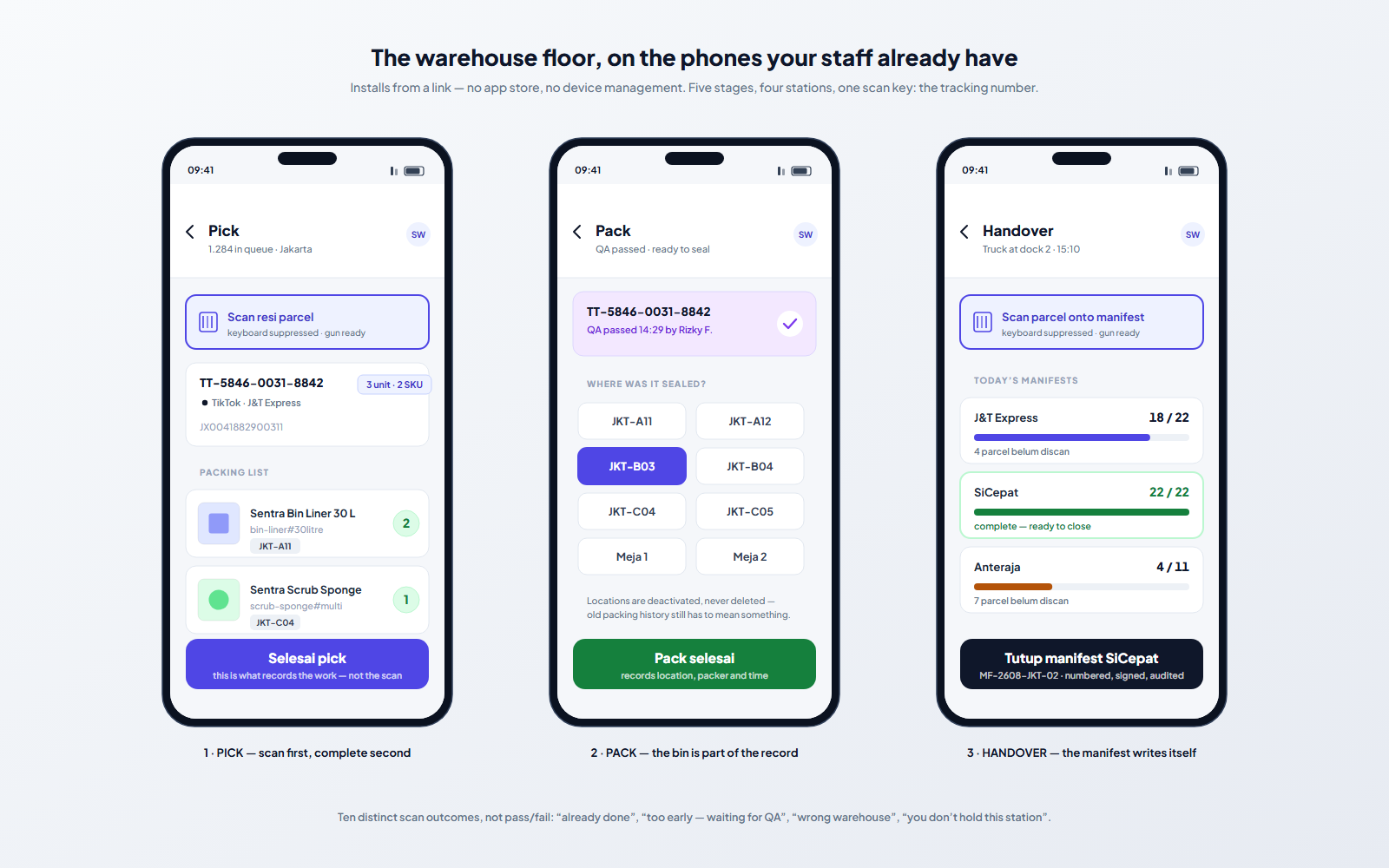
A five-stage scanning pipeline that installs from a link onto the phones the warehouse already has, running the operation across four stations — picking, camera-checked QA at a desk webcam, packing and handover, each stage recording who did it and when. Deployed and trialled end to end on real parcels, ahead of the client's cutover.
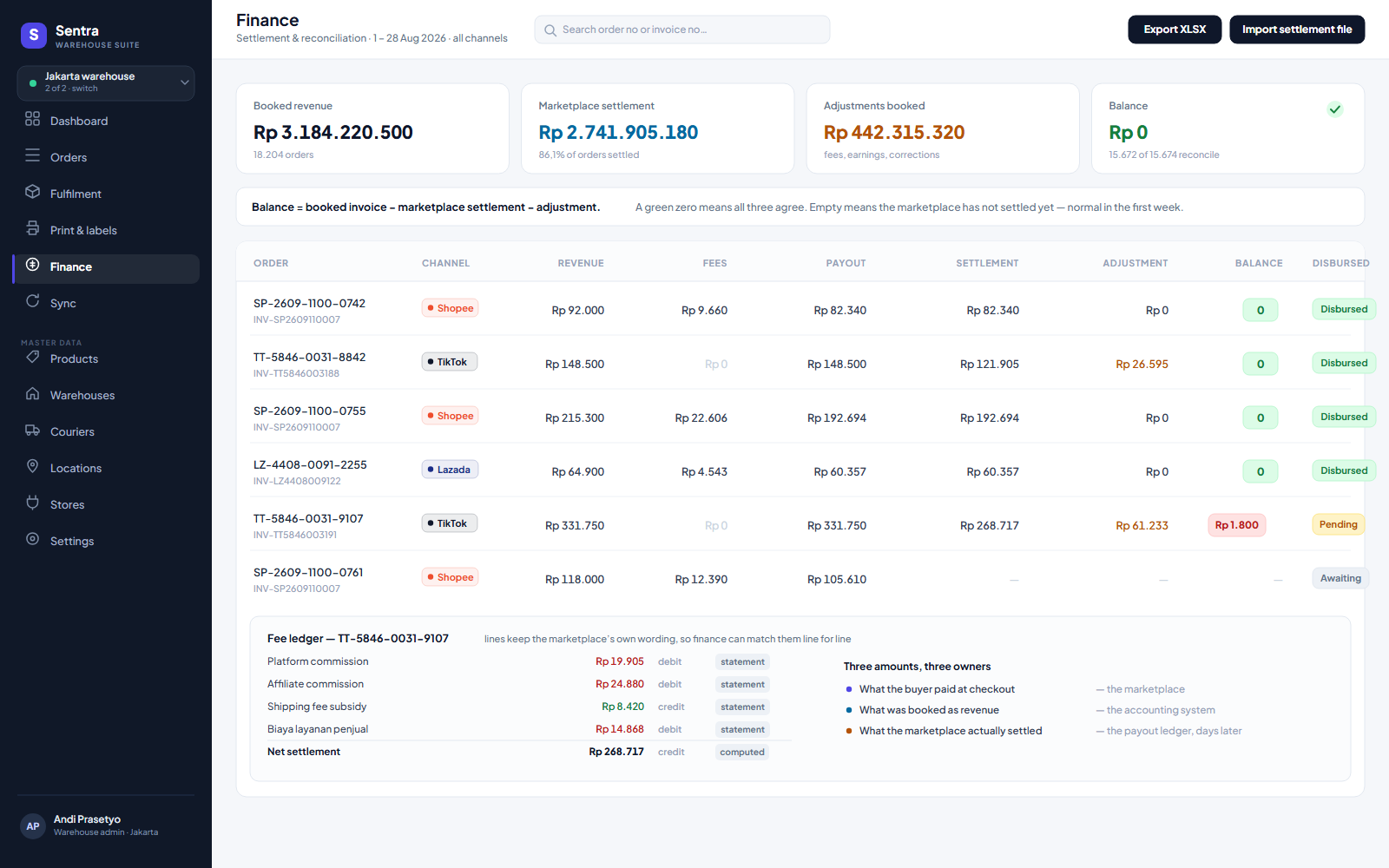
Revenue, marketplace settlement and adjustments sit on one line per order, with a balance column that reads a green zero when the three systems agree — and honest empty states when the marketplace simply has not paid yet.
01
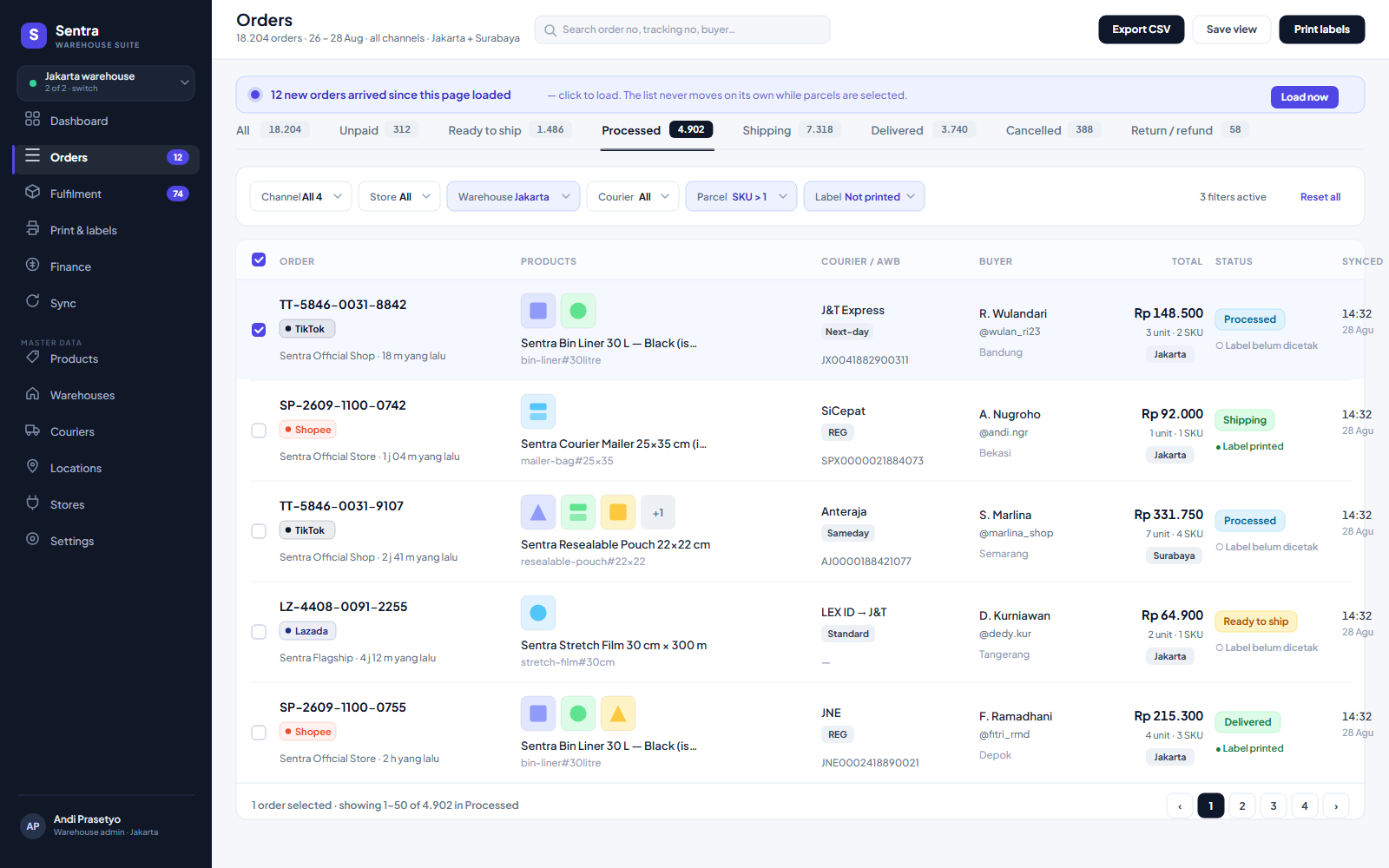
Every order from Shopee, TikTok Shop, Lazada and Blibli becomes one normalised record with a single status vocabulary, warehouse map and courier list. Eleven status tabs carry live counts, the filters go deep, and the filter state lives in the URL — so any view is a link a colleague can open. All four marketplaces are mapped into this model; three sync continuously, while the fourth binds a store to exactly one API client at a time — a platform rule, not a defect — so its live feed waits behind the fulfilment cutover while its finance data arrives by file.
02
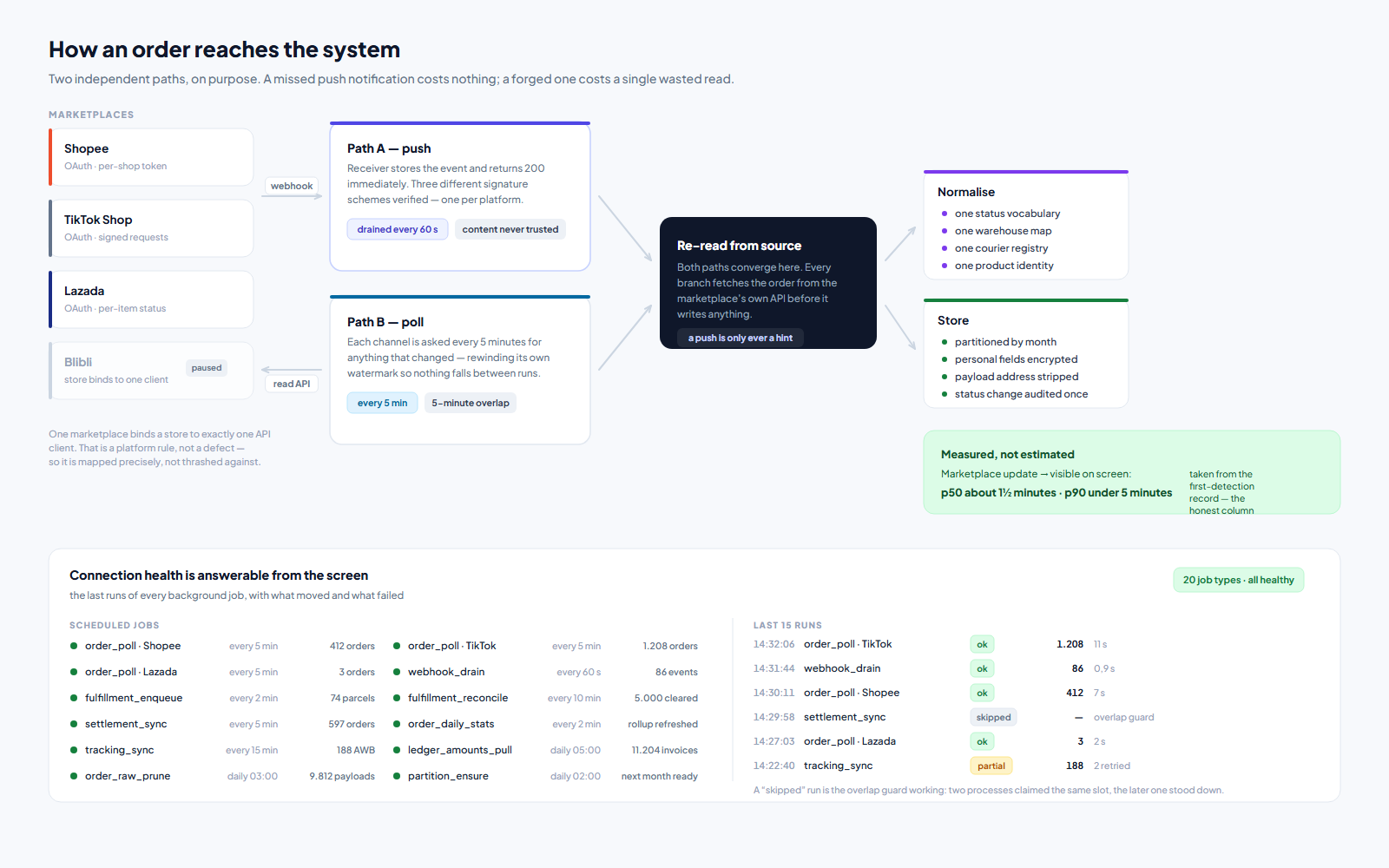
Orders arrive by two independent paths at once — the marketplace tells the system the moment something changes, and a background check re-reads every channel every five minutes in case that message never came. Neither path is trusted on its own: every order is re-read from the marketplace's own API before anything is written.
03
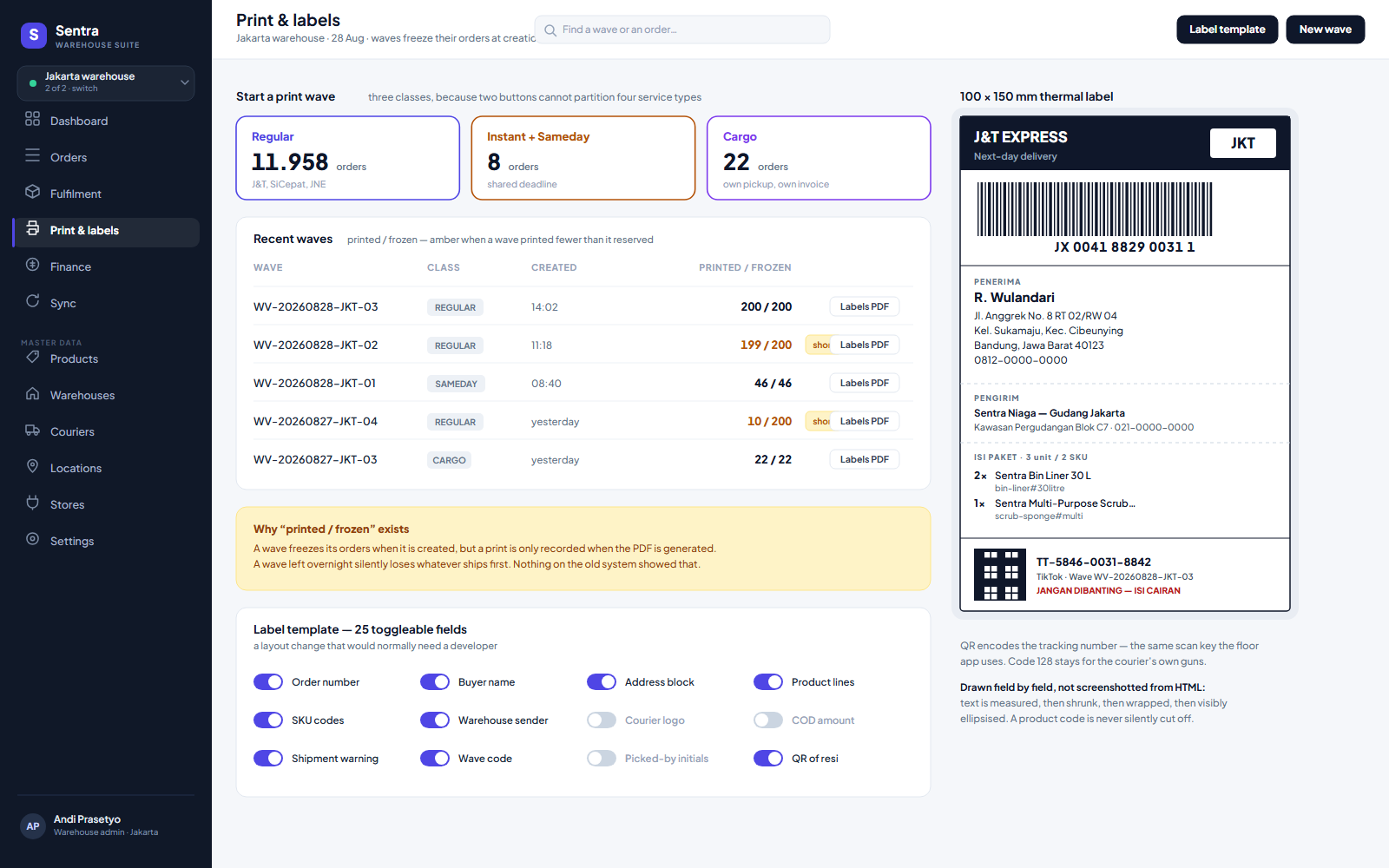
A print wave freezes its set of orders the moment it is created, so the thermal label PDF and the A4 sorting list are generated from the same stored list. Orders already printed are always excluded and every print is recorded per order, because the incumbent system can print the same parcel too. A printed-versus-frozen column turns amber when a wave prints fewer labels than it reserved.
04
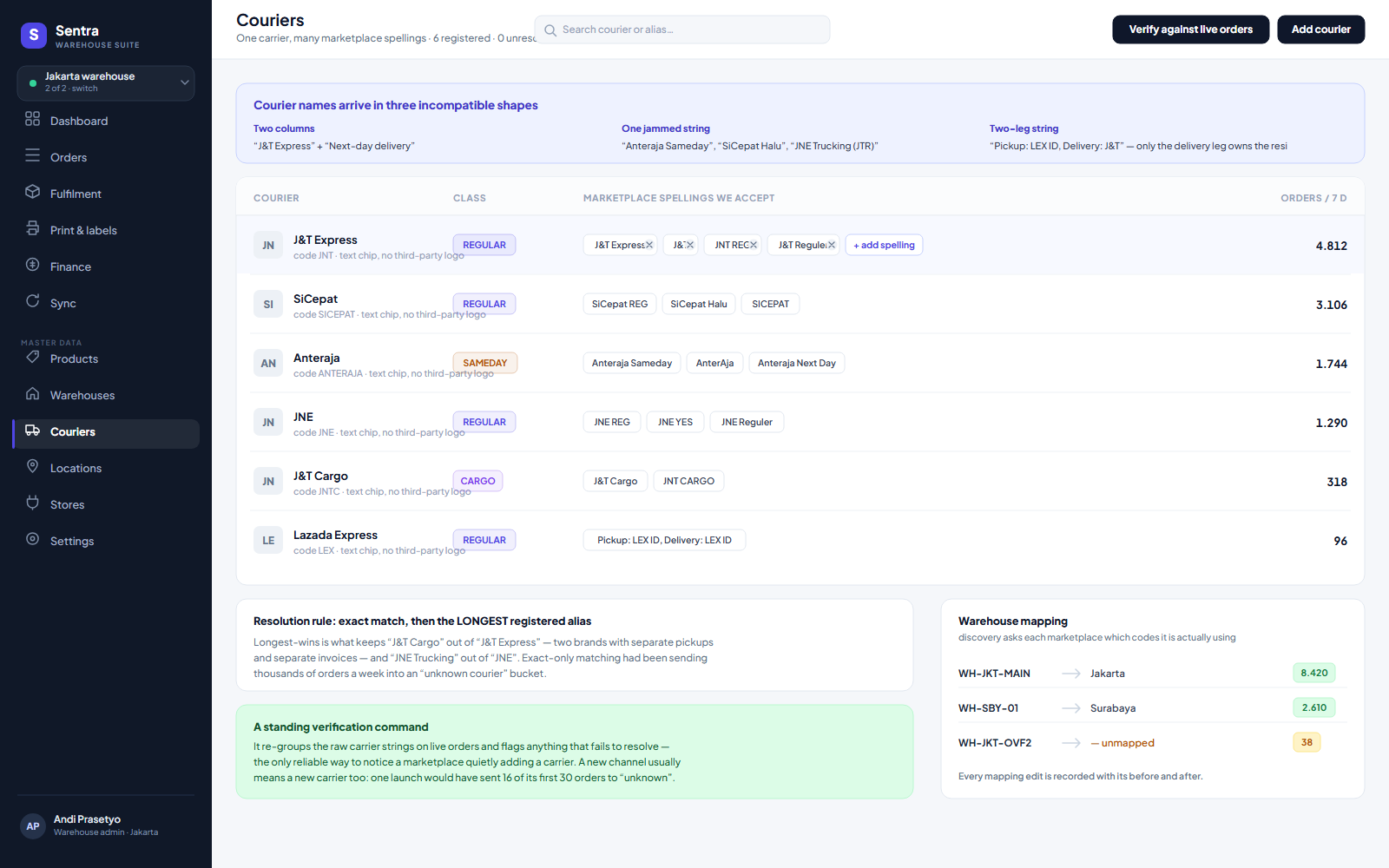
Three registries turn four marketplaces' inconsistent data into one operational vocabulary: warehouse codes routed to real sites, storage locations that are deactivated rather than deleted, and every marketplace spelling of a carrier mapped onto one courier. Resolution is exact match, then the longest registered alias, which is what keeps a carrier's cargo service out of its express service.
Self-service B2B & distributor ordering portal with per-customer pricing, instant Xendit payments, AI purchase-order capture and real-time Zoho Books sync.
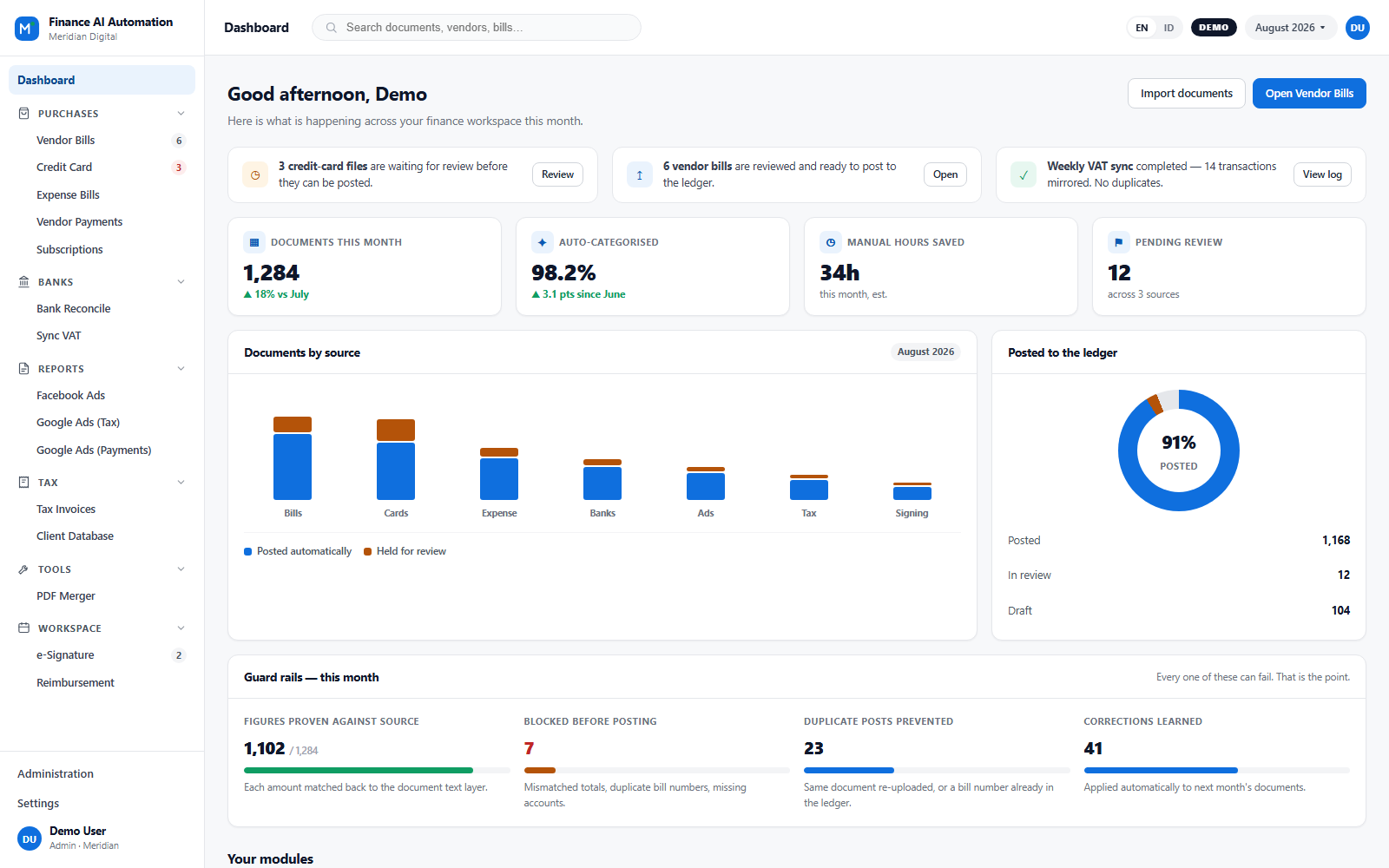
Read, categorise, prove and post every finance document to the books — automatically, with a person in the loop where it matters.
Tell us what you need, and we will help turn it into a real application.